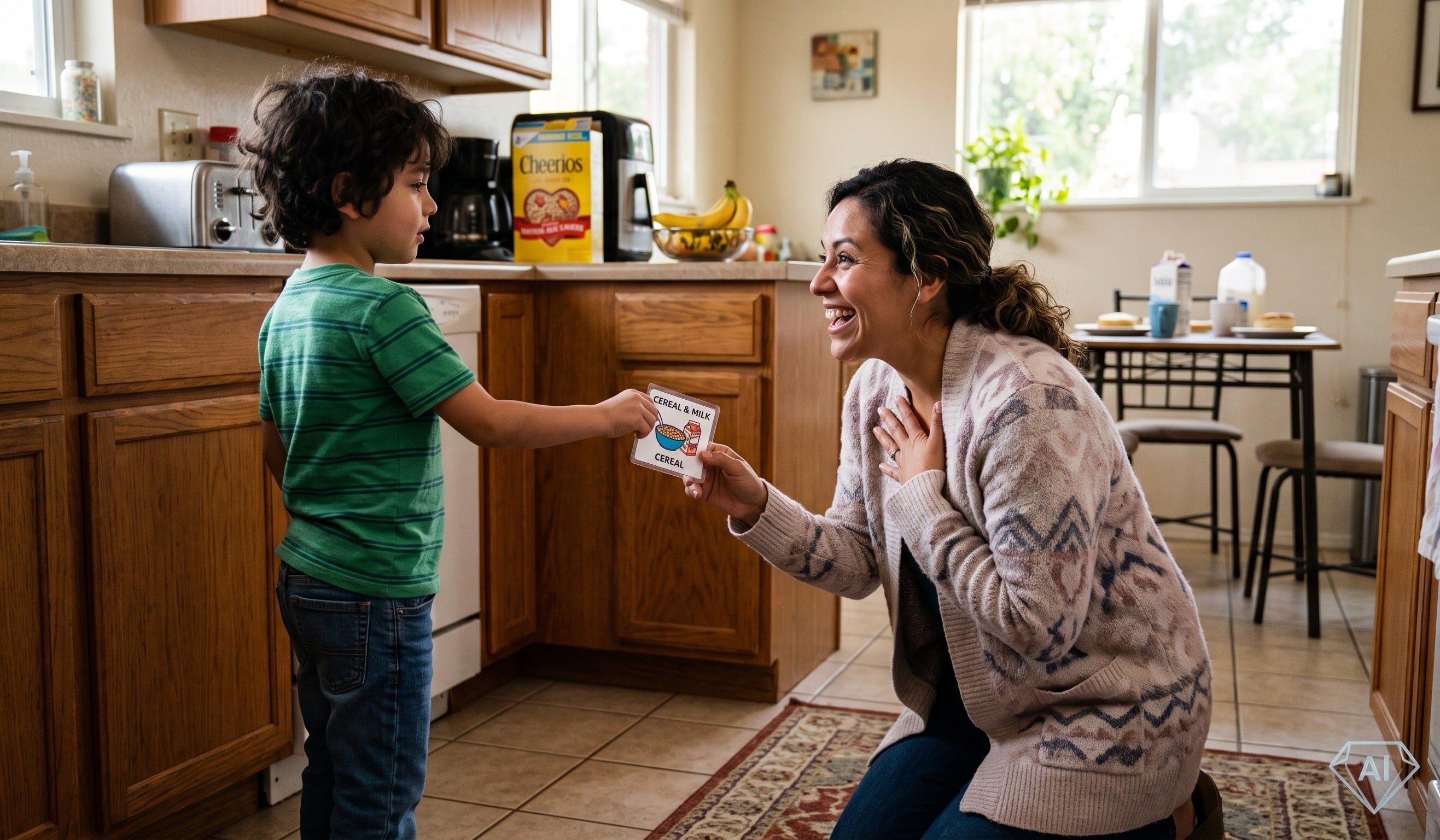







If you notice your child having difficulty with a skill they used to do more independently, you may wonder why the change happened. Your child may need more reminders, have trouble communicating, or struggle with routines that once felt easier. These changes are often called regression, and they can happen for several different reasons. Understanding what may be contributing to the change can help you decide how to support.
What Is Regression?
Regression is a decrease in a skill your child previously showed. You may see changes in communication, independence, daily living skills, social skills, or behavior.
Regression does not necessarily mean your child has completely lost a skill. They may still have the skill but need additional support, practice, or opportunities to use it consistently. Looking at what has changed can help you better understand what may be contributing to the regression.
Why Does Regression Happen?
There is not always one clear reason for regression. Changes in development, routines, expectations, emotions, or a decrease in opportunities to practice can all affect how consistently your child uses their skills.
Let’s explore each of these reasons more in depth.
1. Your Child Is Reaching a New Age or Developmental Milestone
As your child grows, they develop new skills. They may be learning how to become more independent, communicate in new ways, or manage responsibilities that were not expected before.
What does it look like?
Your child has been learning to complete parts of their morning routine independently. As new expectations are introduced, you notice they are asking for more help with tasks they previously handled on their own.
Try this:
- Break new skills into smaller steps so they feel more manageable.
- Give opportunities to practice without expecting immediate independence.
- Provide the amount of support your child needs right now and gradually reduce it as they become more successful.
- Focus on progress toward the new expectation rather than comparing to where they were before.
2. Your Child's Routine Has Changed
Children often rely on familiar routines to know what to expect. Starting a new school year, changing classrooms, traveling, moving, welcoming a new family member, or adjusting to a different therapy schedule can all change what your child is used to.
What does it look like?
Your child's school schedule changes, and you notice they are having a harder time transitioning between activities at home.
Try this:
-
Prepare your child for upcoming changes before they happen. A social story is a fun way to help them get ready.
-
Show your child what their new routine will look like using pictures, words, or a simple schedule.
-
Keep familiar parts of the day consistent when possible.
-
Introduce changes gradually when you can.
-
Give your child time to become comfortable with the new routine.
3. Your Child Is Having Difficulty Managing Emotions
When your child is frustrated, overwhelmed, anxious, or having a difficult day, skills that usually come easily may become harder to use. Strong emotions can make it more difficult for your child to communicate, follow directions, or complete familiar tasks.
What does it look like?
Your child usually asks for help when something is difficult, but when they become frustrated, they begin crying or avoiding the activity instead.
Try this:
-
Watch for signs that your child is becoming overwhelmed before the situation escalates.
-
Practice coping strategies when your child is calm so they feel familiar when they are overwhelmed.
-
Give your child appropriate ways to communicate that they need help or a break.
-
Keep your responses calm and predictable during difficult moments.
-
Once your child is calm, give them another opportunity to practice the skill.
4. Your Child Has Had Fewer Opportunities to Use the Skill
Skills can become less consistent when your child does not have as many opportunities to practice them. School breaks, vacations, schedule changes, or busy periods at home can all reduce the chances your child has to use a particular skill.
What does it look like?
Your child regularly practices communicating their needs during family meals, but after several weeks of a different schedule, you notice they need more reminders to use those communication skills.
Try this:
-
Build practice into activities you already do together.
-
Look for natural opportunities instead of creating additional tasks.
-
Let your child take the lead when completing familiar activities.
-
Give your child opportunities to use skills with different people and in different settings.
-
Continue practicing skills even after they master them.
What Should You Do When You Notice Regression?
When you notice a change, take a moment to look at what may be happening. Think about when you first noticed the change and whether anything else changed around the same time.
You can also:
-
Write down what you are noticing to help identify patterns.
-
Consider recent changes to sleep, school, schedules, expectations, or family routines.
-
Return to supports that have helped your child be successful in the past.
-
Avoid putting pressure on your child to get it right every time.
-
Share your observations with your child's ABA team.
-
If the change is sudden, significant, or comes with changes in sleep, eating, or health, talk with your child's pediatrician.
-
Give your child time to regain consistency instead of expecting the skill to return immediately.
Remember That Progress Is Not Always Linear
Your child's development will not always move in a straight line. You may see progress in one area while another skill temporarily becomes more difficult. That does not erase the progress your child has already made. Instead of focusing only on what they are struggling with today, look at the bigger picture. Notice small improvements, provide the support your child needs, and keep giving them opportunities to practice. Regression can signal that your child needs something different right now. With patience, observation, and support from you and your child's ABA team, you can help them work through the change and continue moving forward.