






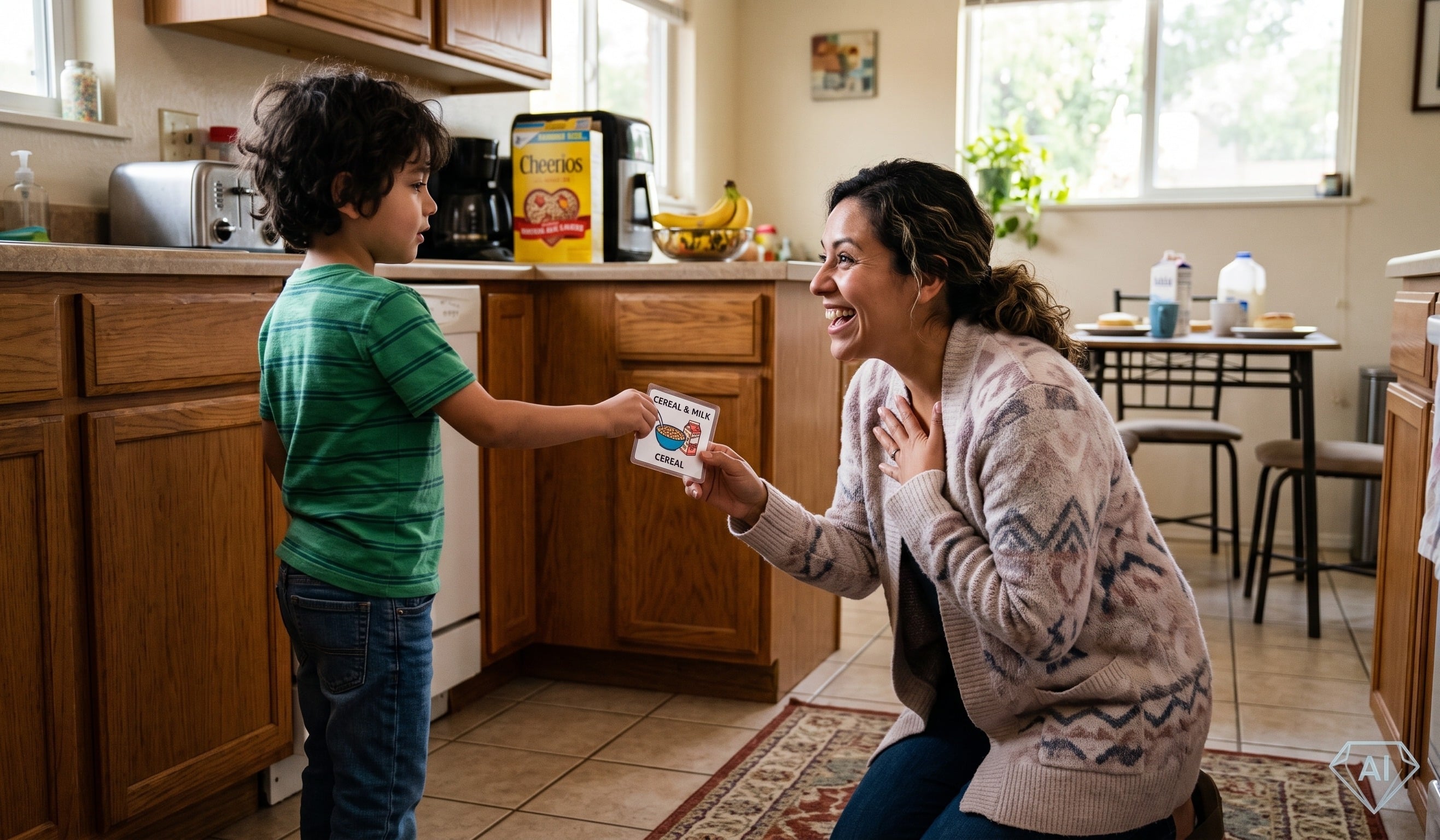
In-home Applied Behavior Analysis (ABA) therapy gives children the opportunity to learn and practice meaningful skills in a familiar environment. When therapy takes place in a child’s natural environment, skills can be connected to the routines and activities already part of a child’s everyday life. Parents and caregivers also have an opportunity to work closely with the ABA team and support their child’s progress outside of scheduled sessions. And good news, your home does not need to look like a classroom. Toys on the floor are practically teaching materials.
Whether your child is currently in an in-home ABA program, you are exploring in-home ABA, or you are just looking to learn, here are five ways families can make the most out of their in-home ABA experience:
1. Be Part of the Process
Parent and caregiver involvement is one of the most important parts of making in-home ABA successful. Sessions are only part of your child's week. What happens in the hours between is just as critical. Engaging in sessions, communicating with your BCBA and RBT, and asking questions are all part of being involved. When you stay involved, your child has more opportunities to receive support and more consistency along the way.
What does it look like?
Your RBT is working with your child on asking for a turn with a favorite toy. You watch from the couch, then try it yourself later that afternoon.
Try this:
- Communicate with your child's ABA team about what you are noticing at home, including strengths, challenges, interests, and progress.
- Observe sessions when possible so you can better understand the strategies being used.
- Ask your RBT to show you one strategy you can use between sessions.
- Ask questions about your child's goals and how you can be involved in progress.
2. Use Everyday Moments and Outings as Learning Opportunities
One of the biggest benefits of in-home ABA is that your child can practice skills in the same environments where they naturally occur. Home is where skills start. The real world is where they grow. These experiences are an important part of generalization, which helps your child use skills they have learned across different people, places, and situations.
What does it look like?
Your RBT joins you on a grocery store trip, where your child gets to practice skills outside the home.
Try this:
- Let your RBT know about upcoming outings where your child may benefit from support.
- Talk with your RBT about which skills may come up naturally during the outing.
- Give your child chances to practice familiar skills in new environments.
3. Keep Communication Open
Open communication between caregivers and the ABA team can make a significant difference in your child’s therapy experience. Your team may see things during sessions that you do not see at home, and you may notice things that do not happen during sessions. Sharing information is essential to ensuring both you and your ABA team have a full picture of your child’s needs and progress.
What does it look like?
Your child starts having a harder time with a routine at home, so you let your RBT and BCBA know what you have been noticing.
Try this:
- Share what you are noticing at home, including your child's strengths, challenges, interests, and progress.
- Let your ABA team know about changes in routines, new behaviors, or anything else that may affect your child's day.
- Share successes with your team, even when they seem small.
- If you have a question or concern about a goal or intervention, bring it up with your ABA team.
4. Practice Skills Outside of Sessions
Skills become more meaningful when children have opportunities to use them outside of scheduled ABA sessions. Family routines can provide natural opportunities to work on communication, independence, and other important skills. This is often where independence and confidence begin to grow.
What does it look like?
During cleanup, your child gets the opportunity to put their own toys away before you step in to help.
Try this:
- Give your child time to try a skill independently before providing help.
- Choose routines that already happen naturally instead of adding extra tasks to your day.
- Ask your ABA team how you can support specific skills between sessions.
5. Celebrate Progress
Every child's progress will look different, and meaningful growth can happen in many ways. A child asking for help, trying a new activity, completing part of a routine, or using a communication skill can all be important accomplishments. It can be easy to focus on the skills your child has not mastered yet, but recognizing the progress they are making builds the confidence they need to keep going. Those small wins, and the "I did it" feeling are how children discover what they can do.
What does it look like?
Last month, putting on shoes took five reminders. Today it took one. You notice, and you tell them.
Try this:
- Be specific when you praise your child so they know exactly what they did well. ("You put both shoes on by yourself! I'm so proud of you.")
- Celebrate effort and improvement, not only perfect performance.
- Share your child's accomplishments with the ABA team so everyone can keep building on progress.
Bringing Therapy and Everyday Life Together
In-home ABA works best when therapy and everyday life support each other. By staying involved, communicating with your child's team, using your RBT during appropriate community activities, practicing skills outside of sessions, and celebrating progress, you can help create more opportunities for your child to learn and grow. Every interaction can be an opportunity to build confidence, independence, and meaningful skills your child can carry into everyday life.
Frequently Asked Questions
Here are some of the questions families ask us most.
Do I need to be home during in-home ABA sessions?
Yes. A parent or caregiver needs to be home during sessions. You do not need to sit in on every minute, but being nearby means you can see what your child is learning and jump in when your RBT invites you.
What if siblings are around?
Siblings are welcome. Everyday life includes brothers and sisters, and sibling play can be a great chance to practice sharing, taking turns, and communicating. Your BCBA and RBT can help you figure out what works best for your family and how to incorporate siblings into sessions.
Do we need a special room for therapy?
No. A quiet, comfortable space helps, but therapy happens where life happens: the kitchen, the living room, even the backyard.
Have more questions?
If you have more questions about in-home ABA therapy, we're here every step of the way: Schedule a Free Consultation.